Riparian Rights
Protect your right to access, use, and enjoy the water bordering your land — fishing, boating, piers, and shoreline use under Virginia law.

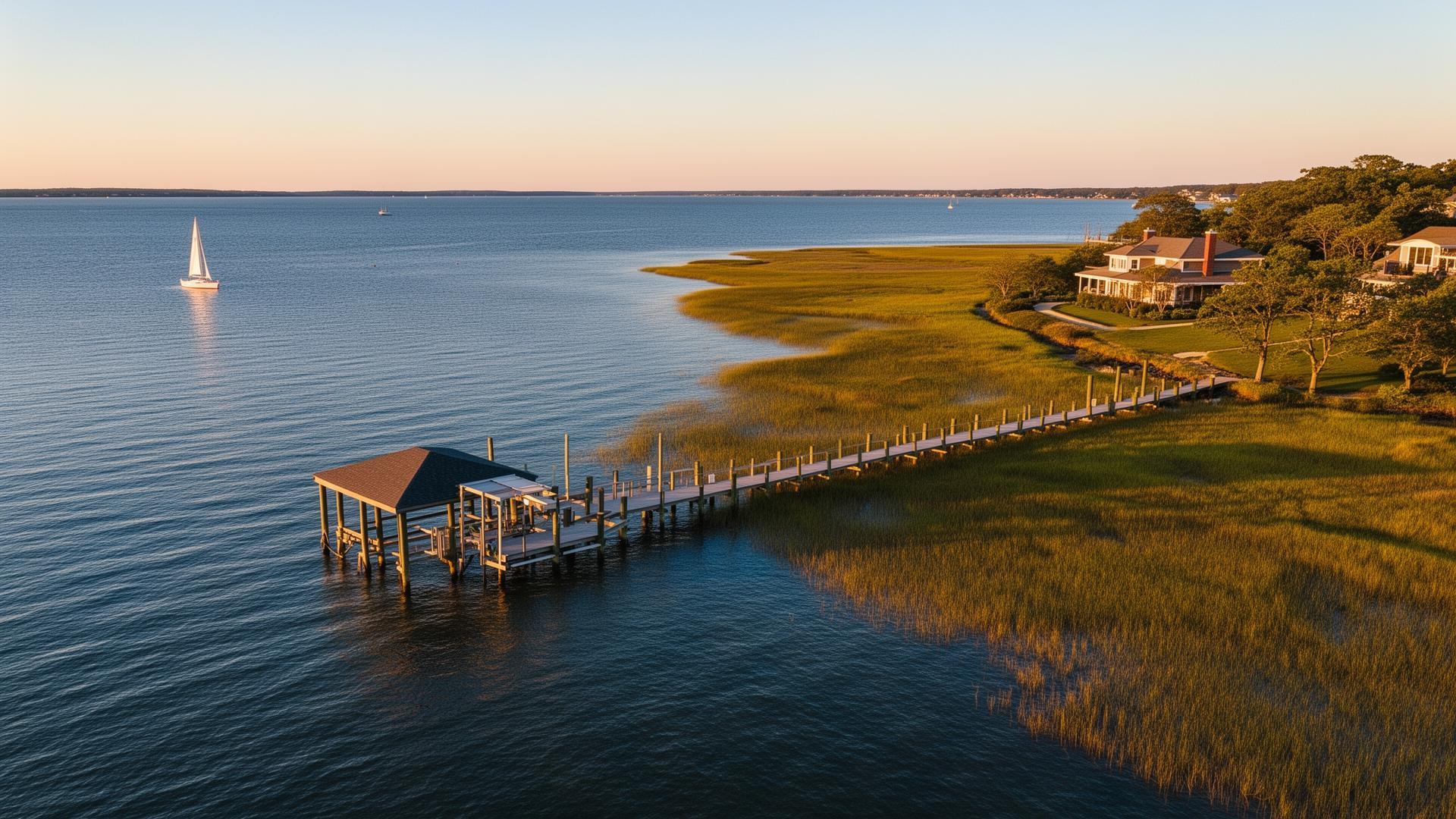
Virginia Waterfront Property Law
Expert legal guidance on riparian rights, dock and pier permits, wetlands, easements, and waterfront disputes — across Virginia and the Chesapeake Bay.
Owning waterfront property in Virginia comes with rights and rules most landowners never have to think about — riparian access, wetlands buffers, Joint Permit Applications, and a patchwork of local, state, and federal agencies.
Our firm focuses on waterfront property law: protecting your shoreline, your access to the water, and the long-term value of your land. When you call, you speak directly with an experienced Virginia waterfront attorney — not a call center or answering service.
Virginia waterfront property law sits at the intersection of real estate, environmental, and maritime law. We handle the issues that matter most to shoreline owners.
Protect your right to access, use, and enjoy the water bordering your land — fishing, boating, piers, and shoreline use under Virginia law.
Stay compliant with the Chesapeake Bay Preservation Act, wetlands rules, and water-quality regulations that shape what you can build and where.
Navigate local, state, and federal permits for docks, piers, dredging, shoreline stabilization, and construction without costly delays.
Resolve boundary, neighbor, and agency disputes through negotiation, mediation, or litigation — with a strategy built to protect your property.
Before you buy waterfront property, get a clear read on title, riparian boundaries, environmental risk, and permit history.
Build, defend, or object to dock and pier projects, and clarify how easements affect your access and waterfront use.
Permit deadlines, agency notices, and neighbor disputes all move quickly. Early legal guidance protects your options.
Call 757-919-4419Most waterfront disputes fall into a handful of recurring patterns. Recognizing them early helps you respond strategically instead of reactively.
Disagreements over a neighbor's proposed or existing pier — alignment, length, navigation interference, or encroachment into your riparian area.
Who pays for and installs seawalls, riprap, or living shorelines when erosion threatens your property — and how local rules shape your options.
Allegations that activity on your land has polluted nearby waters, or claims you need to bring against an upstream property owner.
Where exactly does your waterfront end? Riparian lines extending into the water often drive the real fight in waterfront cases.
Riparian rights are the legal entitlements that come with owning land along a body of water. In Virginia, they include the right to reasonable use and access to the water, the right to build a pier subject to permitting, and the right to protect your shoreline.
These rights interact with shoreline zoning, wetlands rules, and the riparian boundaries that extend from your upland property into the water. Understanding where those lines fall — and how they affect a neighbor's pier or your own — is often the key to resolving a dispute. Learn more about riparian property rights in Virginia.
Virginia waterfront properties are subject to overlapping environmental laws, including the Chesapeake Bay Preservation Act, the Clean Water Act, wetlands rules, and endangered species protections. These laws shape what you can build, how close to the water, and what mitigation may be required.
If you have received a notice of violation, or are planning new construction, dredging, or shoreline work, it is far less expensive to get advice up front than to fix problems later. Explore our environmental law services.
Building or maintaining a dock or pier in Virginia requires careful attention to the Joint Permit Application process, riparian boundaries, and neighboring uses. Easements — written or by long-standing use — can also affect your access and what you can do along the shoreline.
If you need to object to a neighbor's proposed dock, see our step-by-step guide on how to object to a dock permit in Virginia.
A straightforward, attorney-led process focused on protecting your property and your time.
Step 1
Call 757-919-4419 and speak directly with an experienced waterfront attorney — not a call center — about your situation and timing.
Step 2
We review deeds, plats, surveys, permit history, and agency notices to identify the real legal and regulatory issues at stake.
Step 3
We map out the right combination of permit filings, objections, negotiations, and notices to protect your position quickly.
Step 4
Most matters resolve through targeted negotiation or agency action. When litigation is necessary, we are ready to advocate in court.
Waterfront law is what we do — every day. We know the agencies, the regulations, and the practical realities of how disputes actually get resolved along Virginia's shorelines and rivers.
Once construction begins, a permit is issued, or a violation notice goes unanswered, your options narrow quickly. Early legal guidance is almost always cheaper than late legal defense.
Call 757-919-4419Answers to the questions Virginia waterfront owners ask us most often.
Whether you're protecting riparian rights, objecting to a dock, responding to a violation, or planning a shoreline project — get clear answers from an experienced attorney.
Not ready to call? No problem — submit the form below and we'll get back to you promptly. We're here for you, on your terms.