Jim Lang Waterfront Law
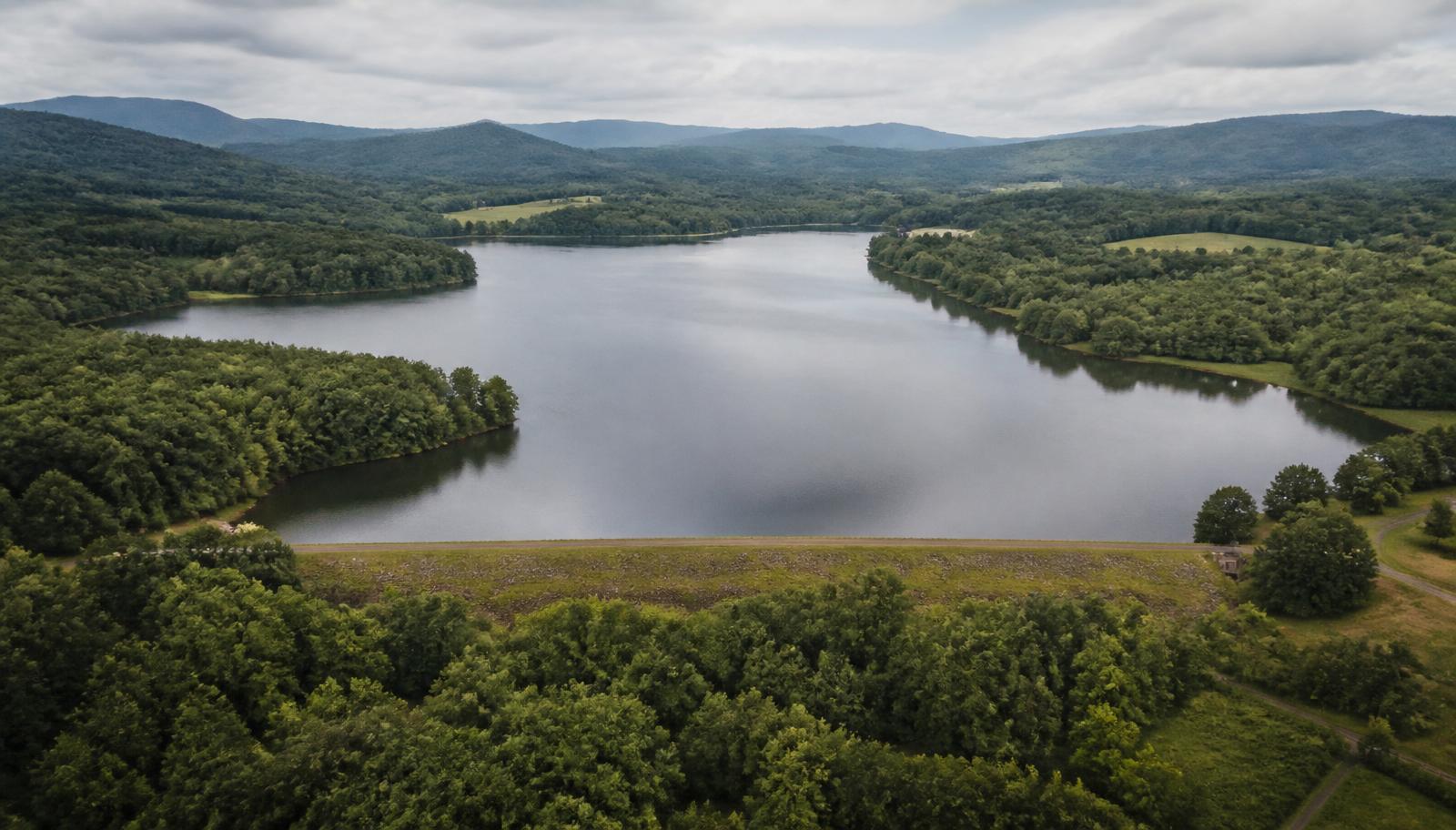
Aerial view of a Virginia lake and earthen dam surrounded by forested hills

Virginia Dam Safety Enforcement Lawyer

Virginia Dam Safety Notice? Act Before the Record is Set.

Serving HOAs, lake communities, and private dam owners in Virginia handling DCR deadlines, corrective plans, Administrative Orders, civil penalties, and (in some cases) liens or litigation. Waterfront Law works with your PE before or right after submission to shape the corrective-action record, push back on unrealistic timelines, and protect against penalties and liens.

Virginia Dam Ownership Is a Serious Legal Responsibility

Virginia is home to over 3,600 dams, and the vast majority are privately owned — by individual landowners, homeowners associations, and lake or property owners' associations who often never realized what they signed up for. Dam ownership usually runs with the land: if you bought property with a dam on it, you likely own that dam too, whether or not anyone told you at closing.

Under the Virginia Dam Safety Act, dam inspections themselves are performed by a licensed Professional Engineer (PE) retained by the owner, who seals and signs the report identifying any deficiencies. The owner then submits that PE report to the Virginia Department of Conservation and Recreation (DCR), which decides whether to require a corrective plan, issue an Administrative Order, or, in imminent-danger cases, act on its own. Jim Lang and Waterfront Law Group are among the few Virginia law firms with a dedicated practice built around this law. We help dam owners understand their exposure, work with their PE before submission, respond to DCR, establish reasonable budgets and timelines, and resolve disputes among the people who share ownership.

How Virginia Dam Safety Enforcement Works

Under the Virginia Dam Safety Act (Va. Code §10.1-604 et seq.), the Soil and Water Conservation Board and DCR classify every regulated dam as high, significant, or low hazard and require regular PE inspections, Operation and Maintenance Certificates, and Emergency Action Plans. What happens after a deficiency is flagged depends heavily on which of two enforcement paths the case follows — and the two paths are not equivalent.

Path 1 — Imminent Danger (Va. Code §10.1-608)

If the state determines that a dam presents an imminent danger to life or property, it can order immediate corrective action. If the owner does not act right away, the Commonwealth can take corrective action itself — without a prior hearing — and later recover its costs from the owner.

In plain English, those consequences can include a lien recorded in the land records, a civil judgment, pressure on any pending sale or refinance, and potential recovery against the owner's other assets.

Contesting this path is difficult unless the owner had already offered or documented proof that the dam was safe before the state acted. That is precisely why early legal involvement matters — the leverage is in what's on file, not what's argued afterward.

Path 2 — Non-Imminent Danger (Va. Code §10.1-609)

The owner's PE inspects the dam, seals the report, and submits it to DCR together with a proposed corrective plan and schedule. DCR can approve, reject, or modify that plan.

If the owner doesn't act diligently, DCR can issue a Notice of Deficiency (Administrative Order) that fixes the required scope of repair and the deadlines. Civil penalties can reach up to $500 per day, capped at $25,000 (Va. Code §10.1-613.2), and knowingly violating an order under the Act is a Class 3 misdemeanor (Va. Code §10.1-613.1).

After an Administrative Order, the owner generally has 30 days to request a hearing before the agency. Later circuit court review is largely limited to that agency record — which is why shaping the PE report and corrective plan on the way in matters more than fighting the order on the way out.

The earlier we get involved, the more leverage we generally have to work with.

The State Is Actively Enforcing. Communities across Virginia are living through it right now.

  • Ivy Lake: A dam repair dispute topped $1 million and led to litigation over forcing homeowners into an HOA to pay for it.
  • West Leigh II: In Nelson County, 37 homeowners have self-taxed hundreds of dollars a year for a decade trying to fund repairs to the Clover Dam.
  • Orchard Lake: In Botetourt County, ownership of the dam was split across 11 residential lots with no HOA ever formed — and the owners ultimately chose to breach the dam rather than pay for repair.
  • Woodhaven (Kent Lake): A 500-home association in Chesterfield County was denied a funding appeal and is facing a $1.5 million repair with a large funding gap.
  • Mattawan: A defunct HOA of 43 properties is now working through a state grant agreement just to keep the dam in compliance.

Every one of these situations started the same way: an owner, or a group of owners, discovered — often for the first time — that they were legally responsible for a regulated structure they didn't fully understand.

More than a decade of helping Dam Owners with...

Whether you are an individual owner, a board member, or a buyer doing due diligence, dam-related issues rarely resolve themselves.

You received a Notice of Deficiency (Administrative Order).

Your licensed Professional Engineer (PE) inspected the dam, sealed the report, and it was submitted to DCR — and now the agency is demanding a corrective plan or has already issued an Administrative Order. Deadlines are short, the appeal process under the Administrative Process Act is technical, and later court review is heavily constrained by the agency record. Bringing counsel in early helps shape what gets submitted and preserves your best arguments before the record is set.

You just found out you own part of a dam.

This happens constantly with older lake communities. A property was sold, a plat was recorded, and somewhere along the way a dam ended up co-owned by a handful of lots — with no clear governance and no one person in charge. We help sort out who actually owns what, and what that means for liability.

Your HOA or lake association can't agree on how to pay.

Dam repairs routinely run into six or seven figures. Boards face resistance from homeowners who don't want to pay, don't believe the numbers, or want to explore removing the dam instead. We help boards build legally sound special assessments and cost-sharing agreements, fix the governance gaps that stall funding, and identify periodic public funding opportunities when they exist — so no single source has to carry the full cost.

There's no HOA at all.

Many older lake communities were never formally organized. When DCR or a lender requires an entity to be legally accountable for the dam, we help form the governance structure needed to move forward.

You're facing liability after a dam failure or an enforcement lawsuit.

Virginia law imposes liability on dam owners for downstream damage under both the Dam Safety Act and common-law claims like trespass and nuisance — and a plaintiff does not need to prove negligence to recover. These cases can carry compensatory and even punitive damages. We defend owners in these matters and negotiate with regulators to minimize penalties, exposure, and unrealistic deadlines.

You're buying or selling waterfront property with a dam on it.

A dam you didn't know existed can derail a closing or create liability you didn't bargain for. We help buyers and sellers identify dam-related exposure before it becomes a problem.

Facing a DCR Order or Dam Repair Deadline?

Deadlines move quickly, and the options you have today may not be available tomorrow. Early legal guidance protects your leverage.

Call 757-919-4419

HOA Dam Repair Liability Under Virginia Law

When a dam is owned by an HOA or POA, Virginia law does not let the association pass all the risk to its management company or spread it thin enough to ignore. The association itself is the "owner or operator" for purposes of the Act, and its board carries the duty to retain a PE, submit inspection reports to DCR, budget for repairs, and keep the dam in compliance. That duty does not disappear just because homeowners disagree about paying for it, and boards that delay often find their options narrower and more expensive later — especially once an Administrative Order is on file. We advise boards on how much authority they already have under their governing documents to assess for dam repairs, and when a special vote, amendment, or new agreement is needed.

What is a DCR Notice of Deficiency (Administrative Order)?

The inspection is performed by the owner's licensed Professional Engineer, who seals and signs the report identifying any deficiencies. The owner submits that report to DCR, and DCR decides how to respond — which, depending on the circumstances, may be a requirement to submit a corrective plan and schedule, or a formal Notice of Deficiency (Administrative Order) fixing the scope of repair and the deadlines. Either way, it starts a clock, and how an owner responds in the first 30 to 60 days often determines whether the eventual repair timeline is workable or crushing. Bringing Waterfront Law in before the PE report is submitted to DCR is usually the highest-leverage moment: it lets us help shape the corrective plan, timeline, and cost framing in a more practical, cost-conscious way, and it preserves better arguments on appeal if one becomes necessary.

Virginia Dam Funding Programs: What HOAs Should Know

Dam-related public funding programs in Virginia may be available from time to time — sometimes as dedicated repair grants, sometimes through other channels — but availability is not constant, allocation is competitive, and many owners never hear about a program while it's open. We help HOAs and individual owners identify whether any such opportunity currently exists for their situation, evaluate eligibility, prepare applications, and combine any funding secured with special assessments and cost-sharing arrangements. The earlier we get involved, the more leverage we generally have to work with.

Dam Safety Legal Services

Notice of Deficiency (Administrative Order) response
Dam ownership & liability determination
HOA / POA formation for dam-owning communities
Cost-sharing & special assessment agreements
Public dam-funding program identification & application support
Dam breach & decommissioning
Litigation defense
Public Service District / special tax district formation

When to Hire a Virginia Dam Safety Act Lawyer

Most Virginia law firms have never handled a dam safety matter, because until recently, few had reason to. That's changing. DCR's inspection and enforcement program has moved from paperwork to active cases — and the firms that understand this law before the crisis hits are the ones who can actually help.

Jim Lang and Waterfront Law Group have been publishing on Virginia dam law since before this became an urgent issue for so many owners, because our waterfront and riparian property practice has always intersected with the water bodies these dams create. We understand the regulatory framework, the litigation history, and — just as importantly — the practical reality of getting dozens or hundreds of homeowners to agree on a plan.

The Earlier You Call, the More Options You Have

Waiting limits your choices. Whether you have received a DCR notice, discovered shared ownership, or are trying to get your community to a workable plan, we can help you build a clear path forward.

Call 757-919-4419

Commonly Asked Questions About Virginia Dam Safety Law

Practical answers for dam owners, board members, and buyers facing Virginia's Dam Safety Act.

Talk to a Virginia Dam Safety Lawyer

Whether you've received an order from DCR, discovered you co-own a dam you didn't know about, or you're a board member trying to get your community to a workable plan — the earlier you bring in counsel who knows this law, the more options you'll have.

Contact Us

Not ready to call? No problem — submit the form below and we'll get back to you promptly. We're here for you, on your terms.